Air fryers work by circulating hot air rapidly around food in an enclosed basket — essentially a compact, powerful convection oven. The result is food with a crispy exterior similar to deep frying, but using a fraction of the oil and in significantly less time than a conventional oven.
What to look for in an air fryer
Capacity — measured in litres or quarts. For 1-2 people, 2-3.5L is sufficient. For families of 3-4, look for 4.2-6L. For larger families or batch cooking, 6L+ or dual-basket models that cook two foods simultaneously at different temperatures.
Basket shape — square baskets maximise usable cooking surface compared to round baskets of the same stated capacity, fitting more food in a single layer for more even cooking.
Viewing window — lets you monitor food without opening the basket and losing heat, which can affect cooking time and crispiness. A genuinely useful feature once you've used one.
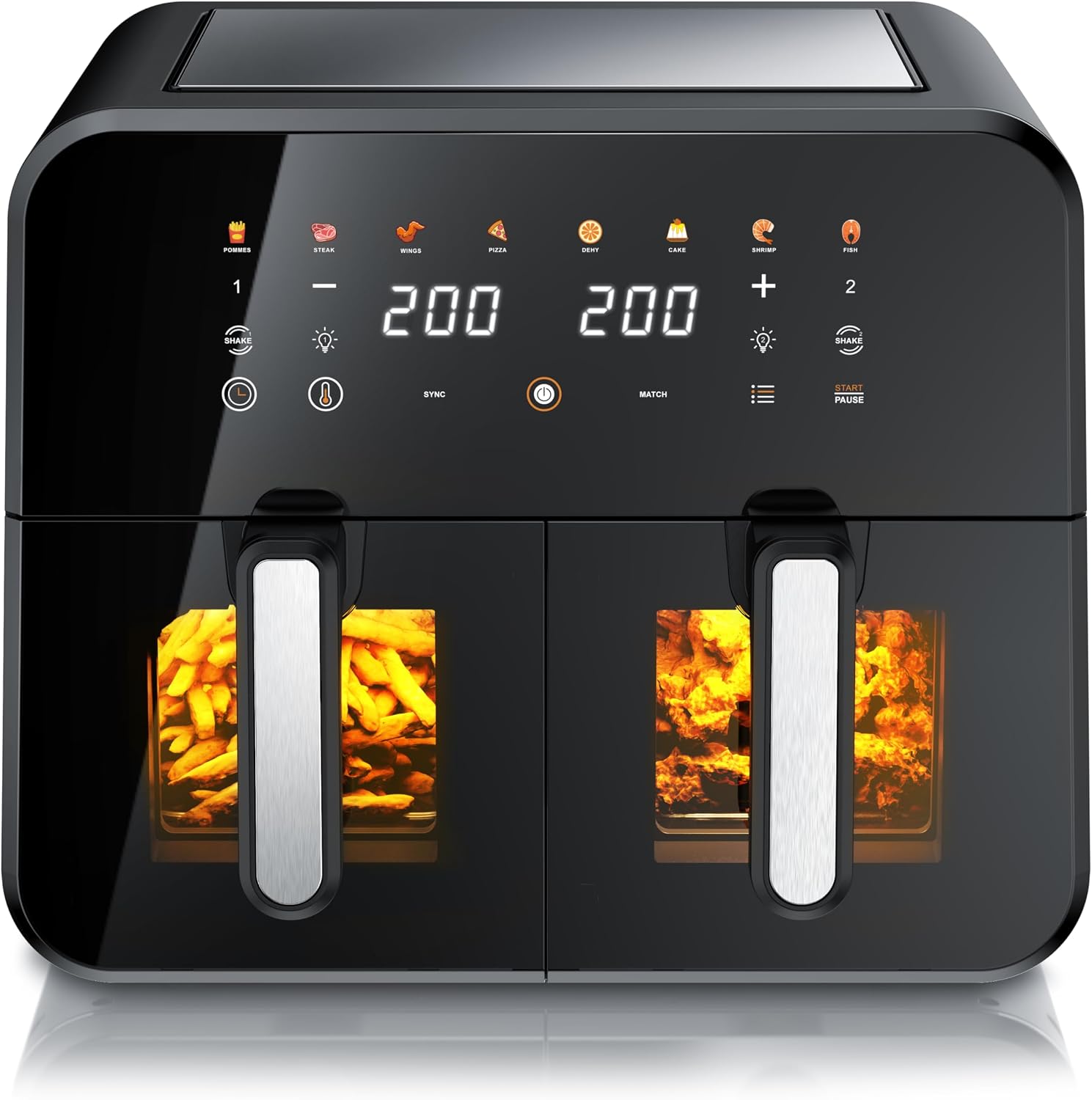
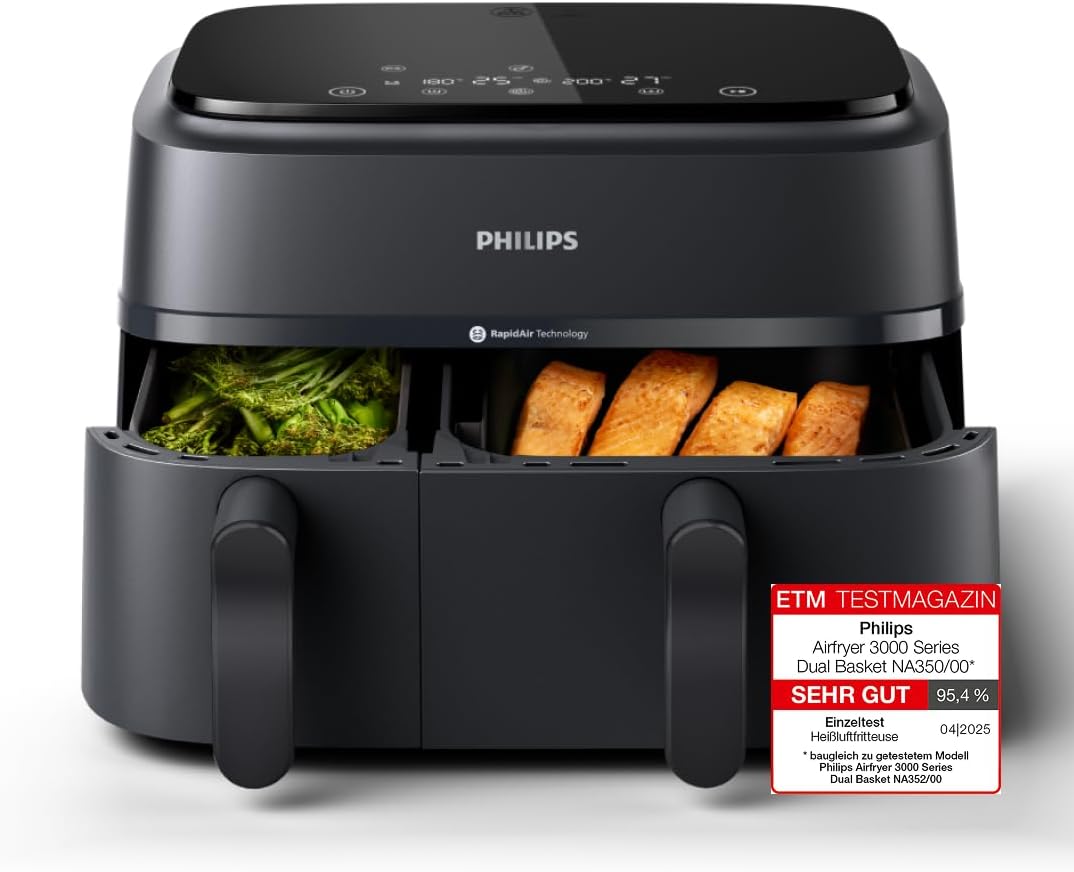
Dual-zone or dual-basket — allows cooking two different foods at two different temperatures simultaneously, with a "match cook" function to finish both at the same time. Ideal for cooking a full meal — protein and vegetables — without one item getting cold while you wait for the other.
Preset functions — beyond basic air frying, look for bake, roast, grill, reheat, defrost and dehydrate presets. More presets mean more versatility, effectively replacing a small oven for many households.
Wattage and cooking speed — most air fryers range from 1,400W to 2,400W. Higher wattage generally means faster preheating and cooking times, though basket design and air circulation matter just as much as raw power.
Ease of cleaning — dishwasher-safe, non-stick baskets significantly reduce maintenance. Removable parts that detach easily for cleaning are a meaningful daily convenience.
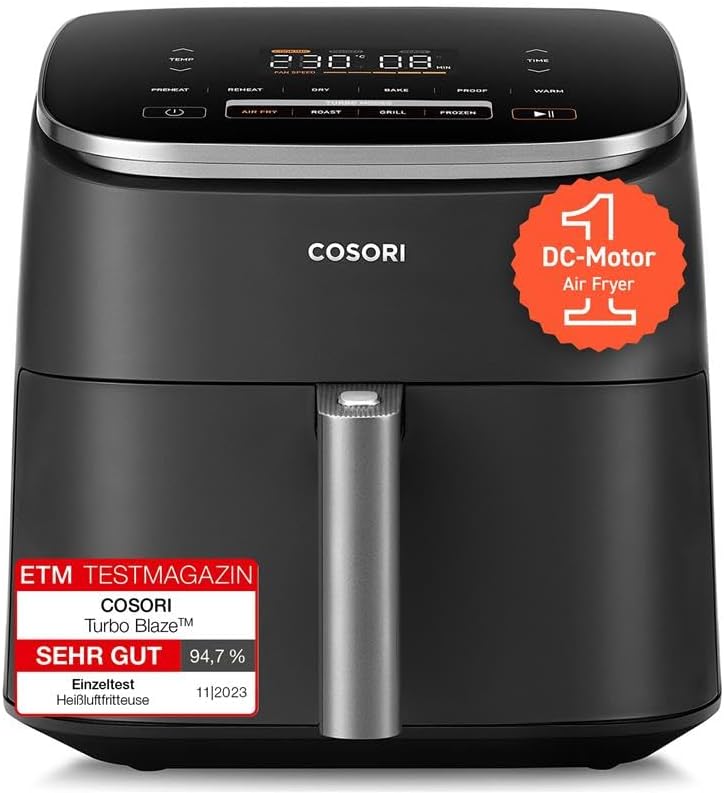
Noise level — fan-based cooking does produce some noise. Quieter DC motor designs are noticeably less disruptive than louder AC motor models, particularly relevant if your kitchen is open to a living space.
Who benefits most from an air fryer
Air fryers are ideal for health-conscious cooks reducing oil intake, busy households wanting faster meal prep than a conventional oven, small kitchens where a full oven isn't practical, and anyone who wants restaurant-quality crispy results without the mess and smell of deep frying.
⭐ Our Top Pick
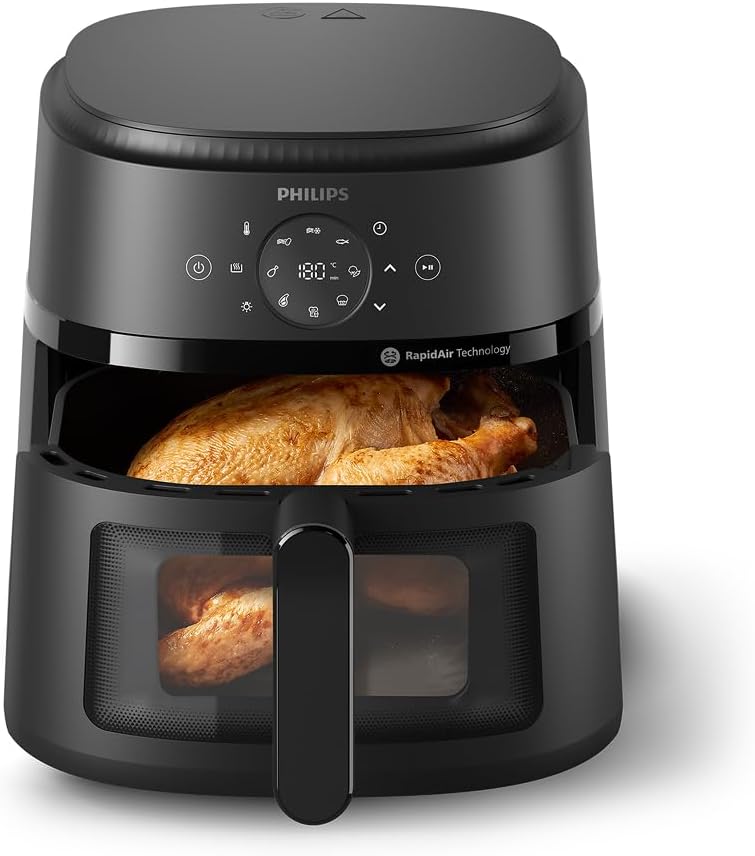
Philips Airfryer 2000 Series 6.2L
The Philips Airfryer 2000 Series 6.2L is the most trusted budget air fryer in this roundup. RapidAir Technology with the signature Philips StarPlate d...
Trusted Philips brand reliability
6.2L capacity — ideal for 3-4 people
RapidAir Technology with StarPlate design
~€109.80 / $125.06
Check price on Amazon ~€109.80 / $125.06

